
How Do Grubs Cause Damage to Lawns?
Grubs damage lawns by feeding on the roots of grass, causing them to turn brown, wilt, and die, often leaving irregular dead patches that lift easily. The infestation also attracts pests like raccoons and birds that dig up lawns searching for grubs. In Pennsylvania, grubs are most problematic in late summer and early fall when their root-feeding activity peaks. To protect your lawn, apply preventative treatments in late spring or early summer to prevent infestations and make these pests a non-issue in the first place. If grubs are already present, use curative treatments immediately to reduce damage and schedule preventative measures for the next year to maintain a healthy lawn.
How do grubs damage lawns?
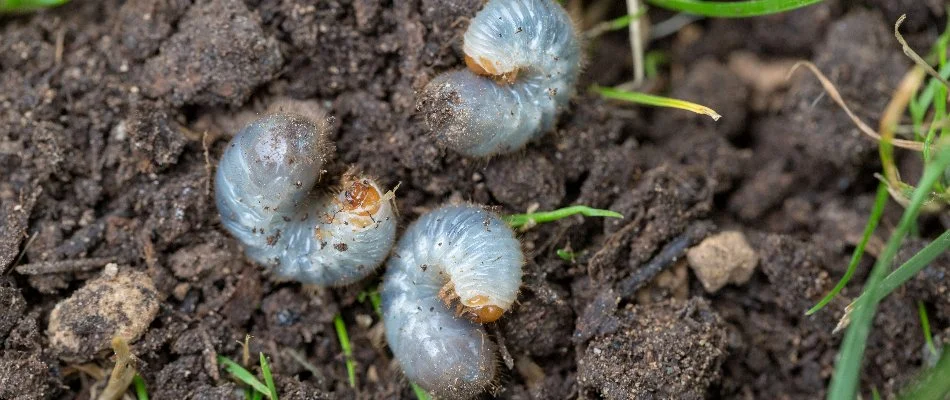
Grubs are notorious for feeding on the roots of grass plants. As they burrow into the soil, they consume the roots, severing the grass from its nutrient source. This feeding activity weakens the grass, causing it to turn brown, wilt, and eventually die. A lawn infested with grubs will often have irregular patches of dead grass that can be easily pulled up like a loose carpet.
In addition to directly damaging the grass, grub infestations can attract other pests, such as raccoons, skunks, and birds, which dig up the lawn in search of these tasty treats. This secondary damage can further compound the problem, leaving your lawn in a state of disrepair.
When are grubs most problematic?
Grubs are most problematic during the late summer and early fall months. During this time, the larvae are actively feeding on grass roots, causing the most damage. As temperatures cool, the grubs burrow deeper into the soil to overwinter. In the spring, they emerge again, but their feeding activity is typically less intense than in the fall.
It's important to note that grub infestations can vary from year to year, depending on environmental conditions and the presence of adult beetles. However, late summer and early fall are generally the peak times for grub activity.
How can you protect your grass from grubs?
Protecting your lawn from grubs involves both preventative and curative measures. By taking proactive steps, you can minimize the risk of a grub infestation and ensure your lawn remains healthy and vibrant. Preventative grub control treatments are designed to target grubs before they become a problem. These treatments are typically applied in the late spring or early summer, before the grubs begin their feeding frenzy. By applying a preventative treatment, you can effectively stop the grubs from causing damage to your lawn.
If your lawn is already infested, invest in curative treatments ASAP and make sure to schedule preventative next year. Prompt intervention is key if your lawn is already infested with grubs. Curative treatments are designed to target existing grub populations and stop them from causing further damage. These treatments should be applied as soon as you notice signs of a grub infestation, such as brown patches of grass that can be easily pulled up.
Give us a call today to sign up for our grub control service!
Grubs can cause significant damage to your lawn, and you need prompt intervention to stop them from wreaking further havoc. Here at Lehigh Valley Lawn, we offer a grub control service to help you protect your grass from these damaging pests. We offer both preventative and curative grub control treatments for effective protection against these root-feeding pests.
We offer this service to commercial and residential properties in Macungie, Emmaus, Breinigsville, and surrounding communities in Pennsylvania. Call us today at (484) 547-8246 to sign up for this service!

Comments (0)
Thanks for your comment!
Thanks for your feedback! Your comments have been successfully submitted! Please note, all comments require admin approval prior to display.
Error submitting comment!
There is a problem with your comment, please see below and try again.